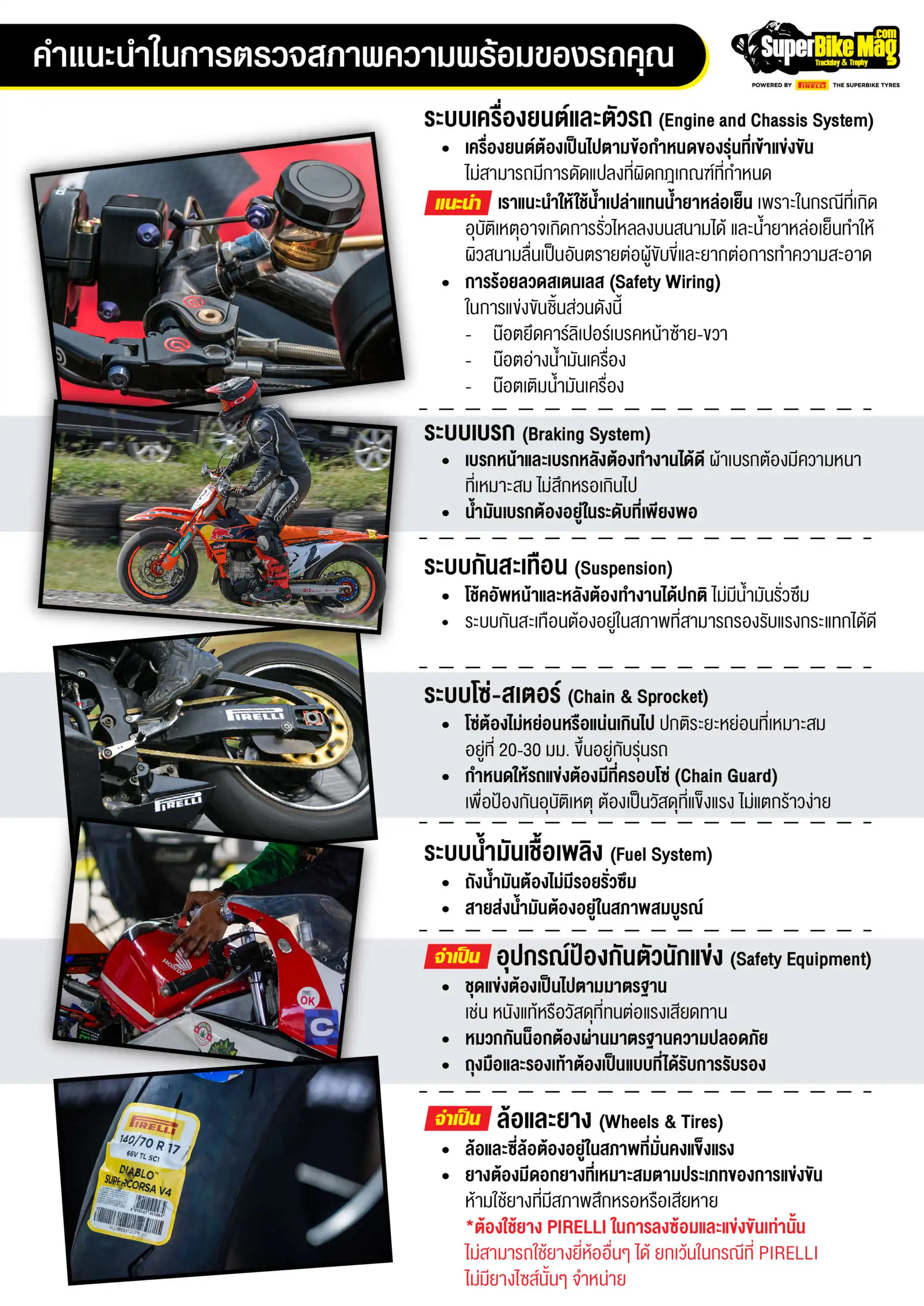
01 Engine and vehicle system
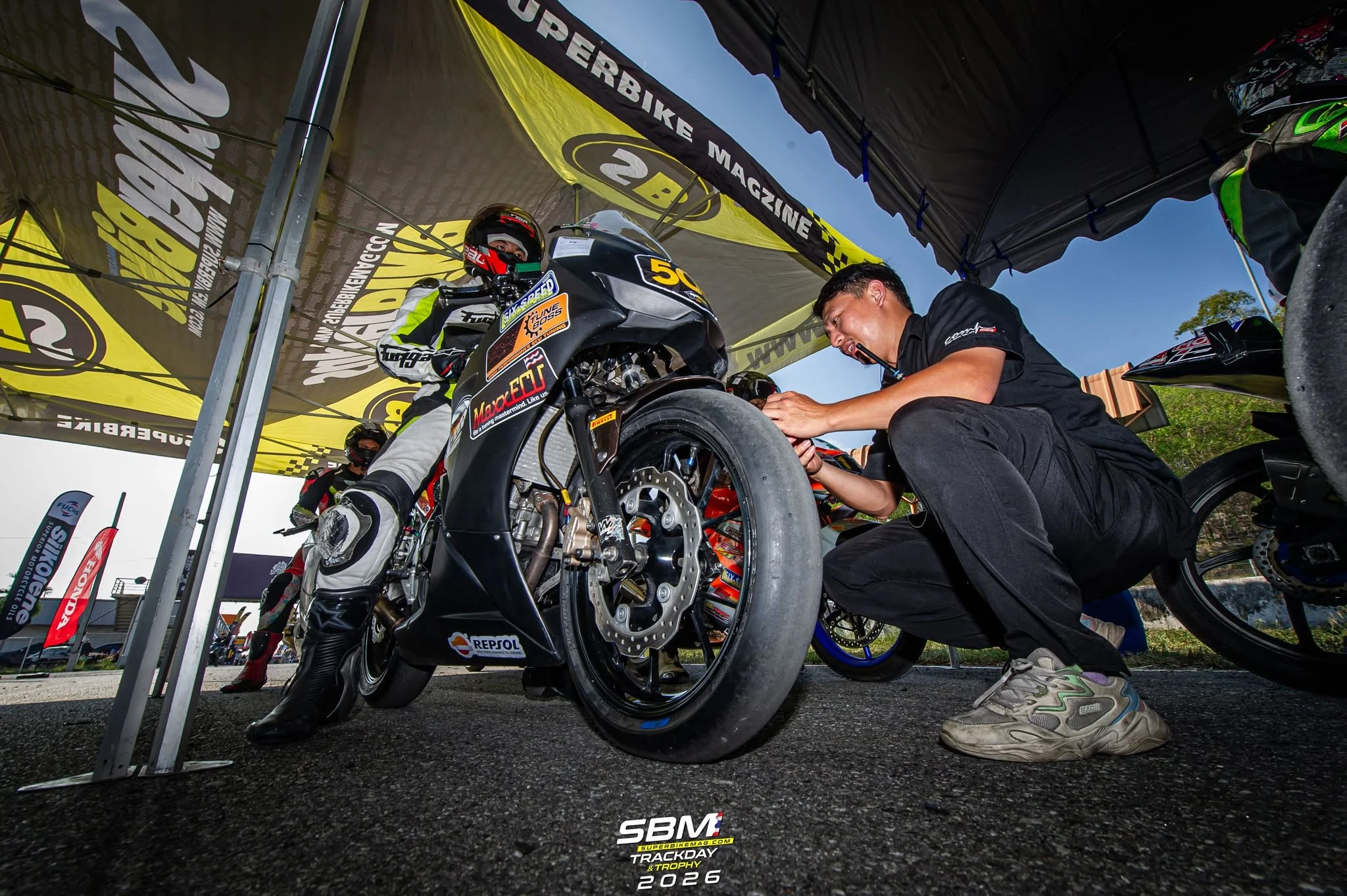
- It must comply with the requirements of the competing class.
- No modifications that violate the established rules are allowed.
- We recommend using water instead of coolant because in the event of an accident There may be a leak on the field. And coolants make the surface slippery, dangerous to drivers and difficult to clean.
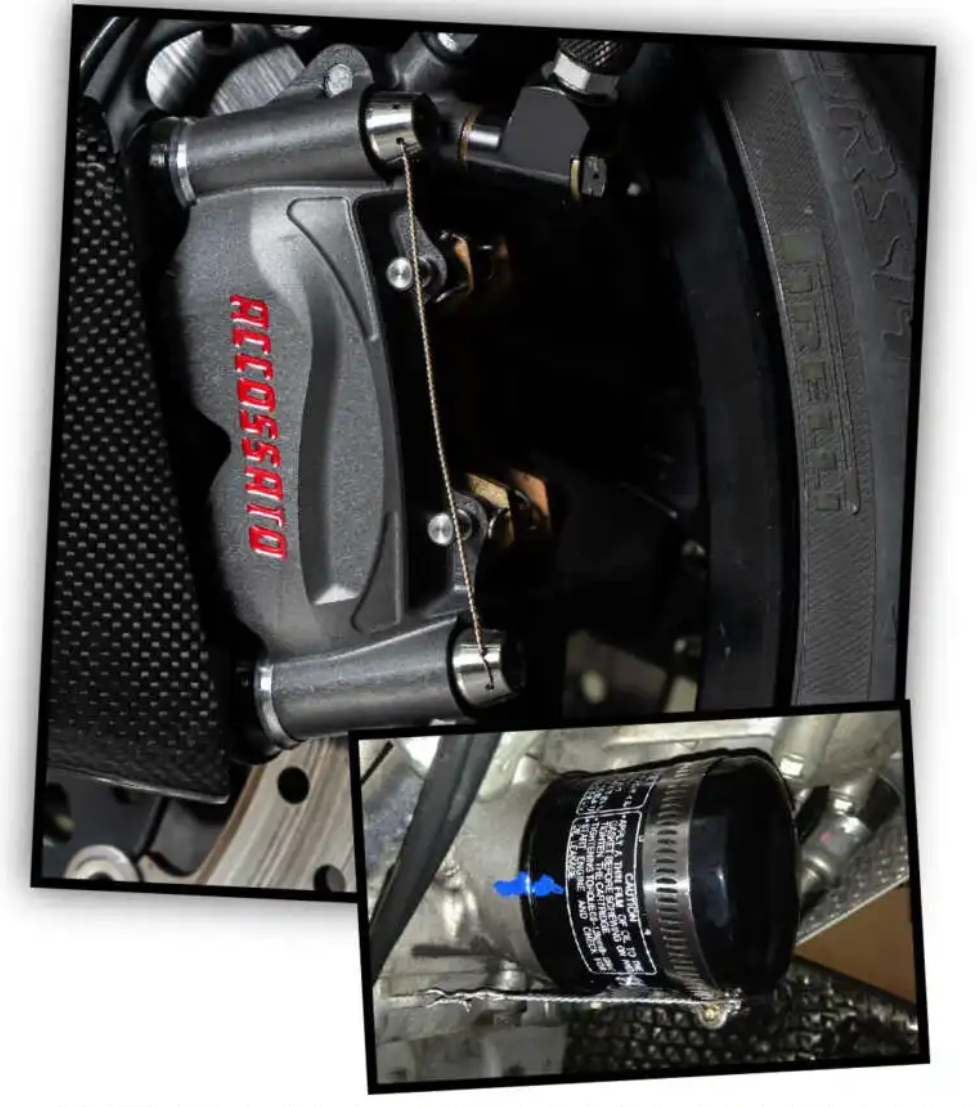
- The stainless steel safety wiring used in the competition consists of the following parts:
- Front brake caliper mounting bolts (left and right).
- Oil pan drain plug
- Engine oil filler cap
- Oil cooler nut
02 braking system
03 Suspension system
04 Chain and sprocket system
- The chain should not be too loose or too tight.
- Typically, the optimal sag is 20-30 mm, depending on the vehicle model.
- Adjust the chain tension to the correct level when a racer is sitting on the bike.
- ""Chain guards" are mandatory for racing cars to prevent accidents. They must be made of a strong material that is not easily cracked.
05 Fuel system
06 Wheels and tires
- The tires must have the appropriate tread pattern for the type of competition.
- Do not use tires that are worn or damaged.
- The wheels and spokes must be in good, stable condition.
In order to comply with the technical and safety requirements of the competition, and to maintain the same standards for all participants, riders must use only Pirelli tires during Friday's practice sessions, Saturday's track day/qualifying, and Sunday's race.
*Except in cases where Pirelli does not stock that particular tire size.
07 Other requirements
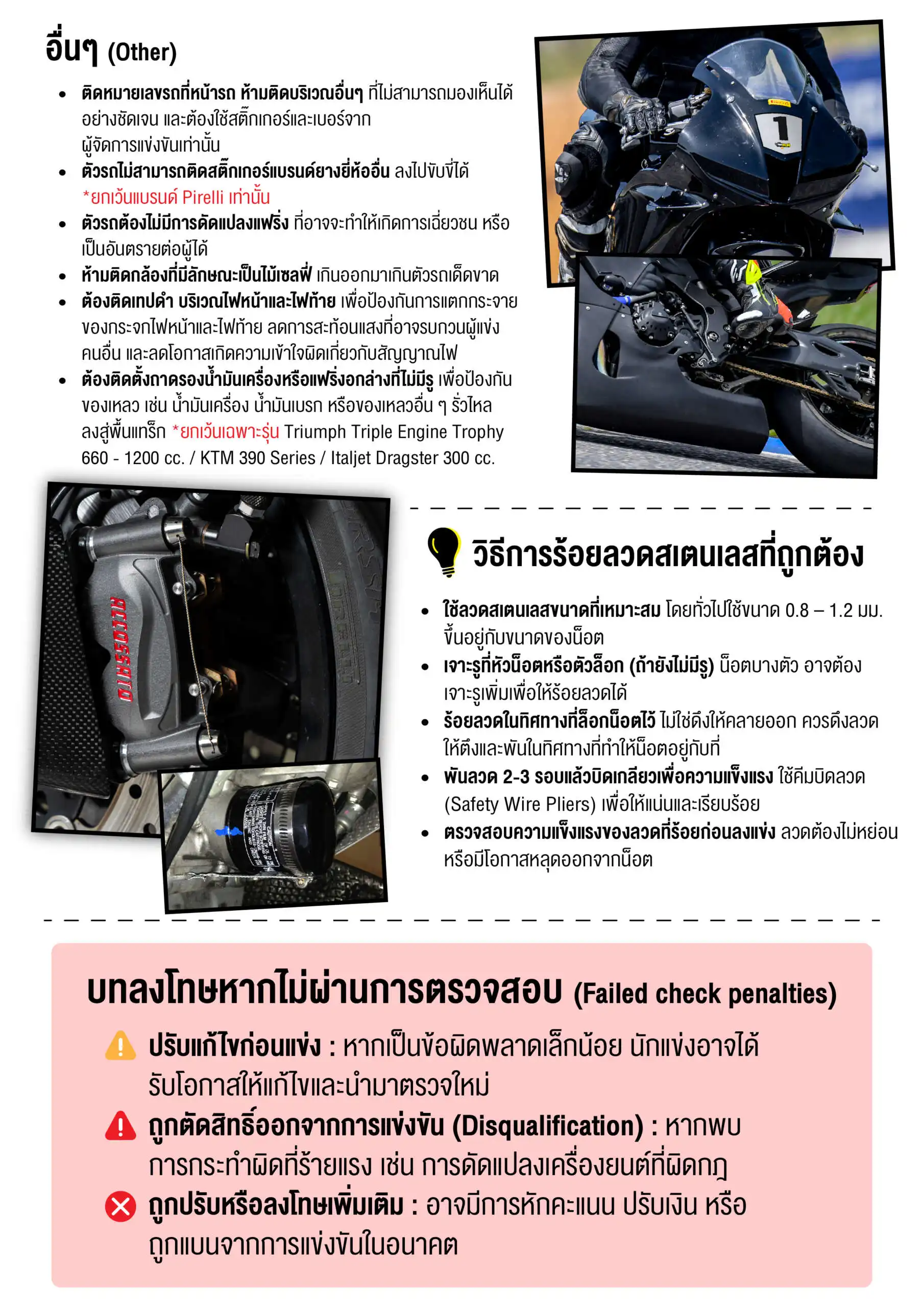
- Attach the car number to the front of the car; do not place it anywhere else where it is not clearly visible. Only use stickers and numbers provided by the race organizers.
- The vehicle cannot have stickers of other tire brands attached to it, except for Pirelli.
- The vehicle must not have any modifications to the fairings that could cause collisions or endanger others.
- Never attach a camera that resembles a selfie stick and extends beyond the vehicle's frame.
- Black tape must be applied to the headlights and taillights to prevent the headlight and taillight glass from shattering, reduce glare that might disturb other competitors, and minimize the chance of misunderstandings regarding the light signals.
- A drain pan or a non-perforated lower fairing must be installed to prevent fluids such as engine oil, brake fluid, or other fluids from leaking onto the track.
- In the Honda Cup, KTM 390 Series, and Eurobike Cup racing classes, the lower fairing is waived for participation.
08 Punishment
🚨 If the vehicle fails the inspection.
If a vehicle fails an inspection, there are different penalties depending on the severity of the problem, such as:
- ⚠ Make adjustments before the match. – If it's a minor error, the racer may be given a chance to correct it and resubmit it for inspection.
- ❌ Disqualified from the competition. – If a serious offense is discovered, such as illegal engine modification.
- 🚫 Subject to further fines or penalties. – This could result in point deductions, fines, or a ban from future competitions.
09 Field layout and flag rules.
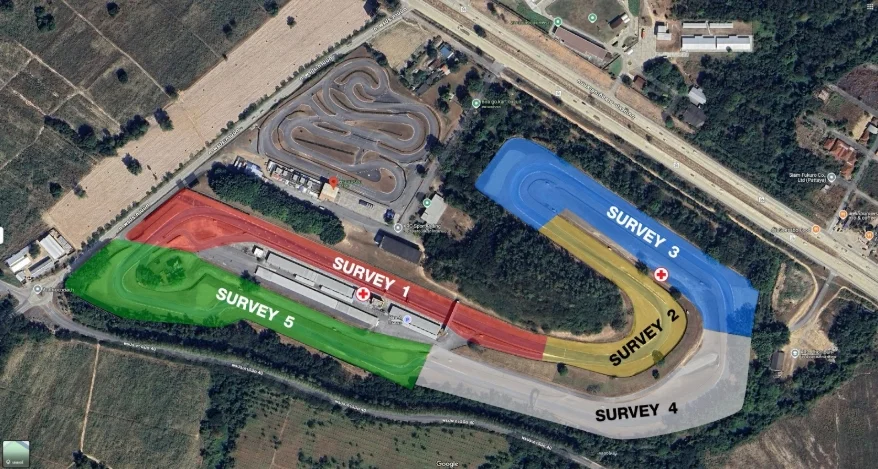
🗺️ Area Zone Survey
⚠️ Strict adherence to flag signaling rules is required.
- The role of a racer: All racers must study the rules of flag signals and strictly follow them.
(Violation of these rules may result in a fine or adjustment to the match results, as stipulated.) - In case of vehicle problems (fluid leak/loose part): If any race car has a fluid leak or a part of the car comes loose, it could endanger other racers. The flag bearers at each point will use signals. ""Place a red flag on the vehicle."" Instruct the racers to immediately exit the race track and park in a safe area.
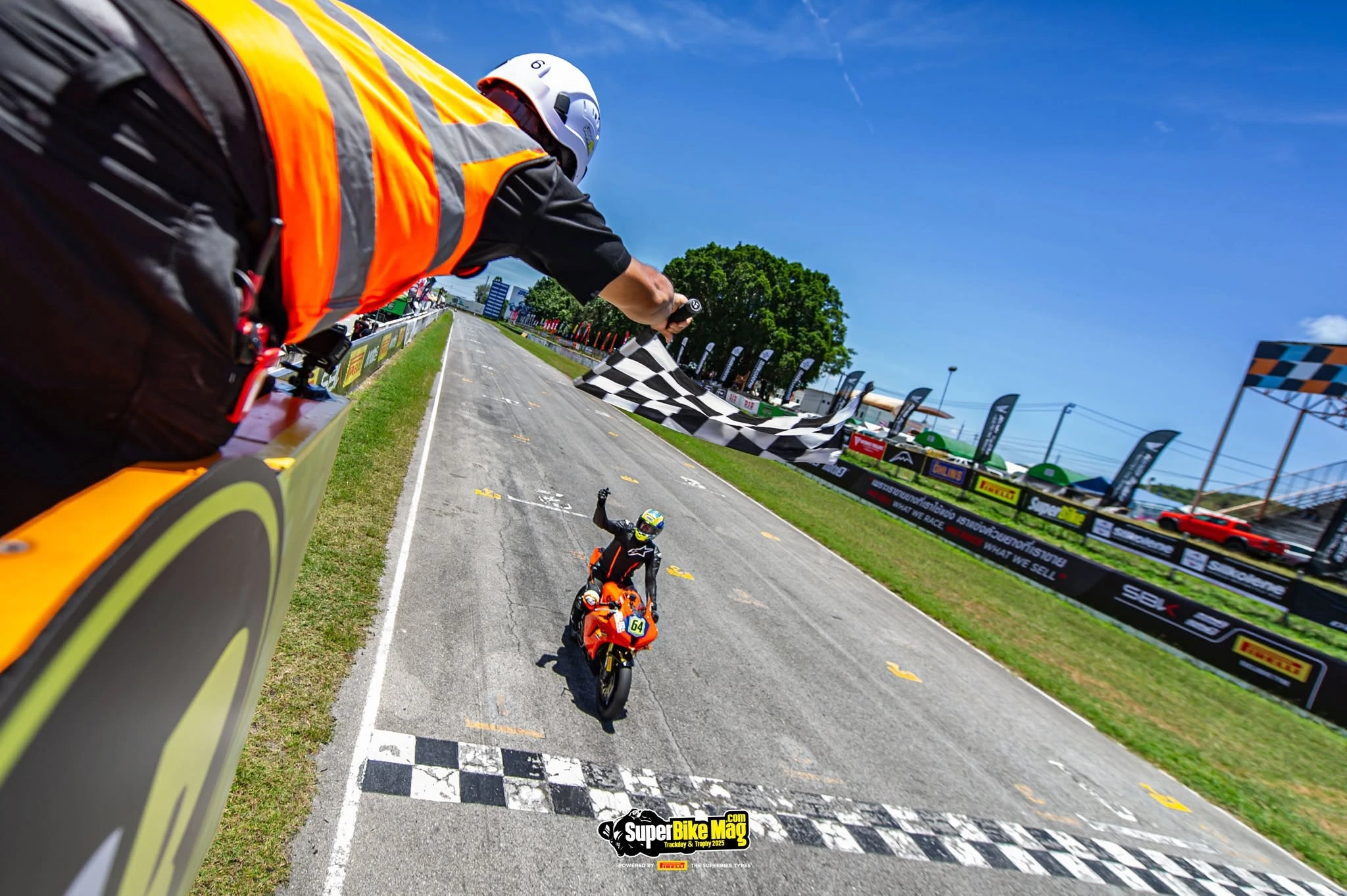
(Violation of these rules may result in penalty for match results and may also result in a fine as deemed appropriate.) - Driving termination signal: Every time practice, qualifying, or a competition ends, ""Chess flag"" Notify all racers at the finish line.
- Red flag signals include: During practice, qualifying, or the race, if the officials use a red flag signal, the driver must... Slow down, do not overtake, and return your race car to the pit lane immediately.
(Any race car that fails to enter the pit will be fined 2,000 baht per lap.) - Yellow Flag Signal: When the officials use the yellow flag signal, all racers must... Reduce your speed and absolutely do not overtake. Until the green flag signal is received.
10 How to thread stainless steel wire.
-
1Use stainless steel wire of the appropriate size. Typically, 0.8 – 1.2 mm is used, depending on the size of the nut.
-
2Drill a hole in the bolt head or locking mechanism (if there isn't one already). Some nuts may require drilling additional holes to allow wire to be threaded through.
-
3Thread the wire in the direction that locks the nut, do not pull it to loosen it. The wire should be pulled taut and wrapped in a direction that holds the nut in place.
-
4Wrap the wire 2-3 times and twist it for added strength. Use safety wire pliers to twist the wire tightly and neatly.
-
5Check the strength of the wire before competing. The wire must not be loose or likely to come loose from the nut.
11 Dress regulations
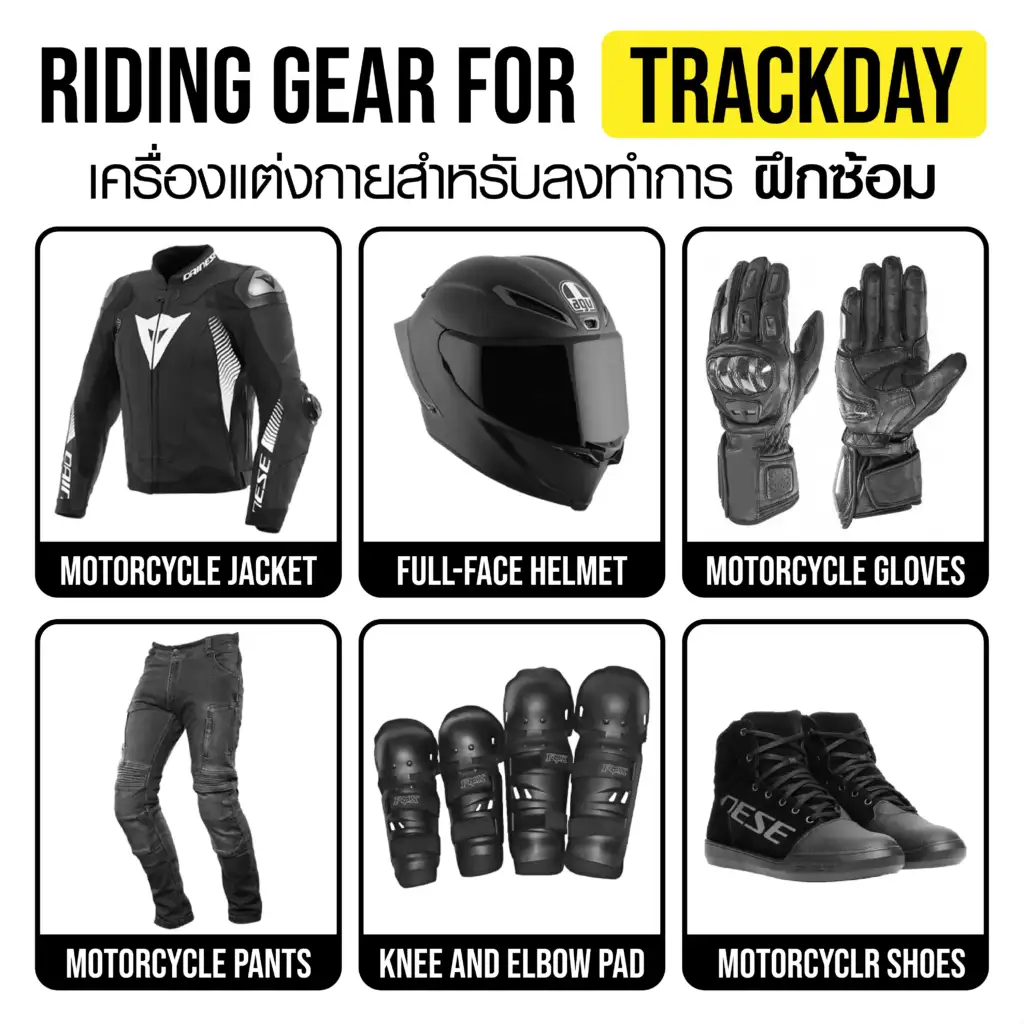
- Helmet
- The helmet must be a full-face helmet that meets safety standards such as DOT, Snell, or ECE.
- The helmet must have a tight and secure chin strap to minimize the risk of head injury.
- A visor is required to provide clear visibility and protect against foreign objects such as dust or insects.
- Leather protective suit
- The suit must be a full-body suit made of leather or synthetic material that is resistant to scratches and impacts.
- Critical areas such as the knees, elbows, shoulders, and hips should have additional protective padding to prevent injury.
- The suit must be a snug fit and have a system to prevent it from coming loose from the body during an accident.
- Gloves
- The gloves used must completely cover both the hand and wrist.
- It must be made of durable materials and have reinforced impact-absorbing padding on the palms and fingers to prevent injury.
- The gloves must be flexible enough to allow the racer to have smooth control of the throttle and brakes.
- Shoes (Boots)
- The shoes must be high boots that effectively protect the legs and ankles.
- They must be made of durable materials and have reinforced protective plates around the ankles and heels to prevent injuries.
- The soles of the shoes must not be slippery and must provide good grip while the racer uses gear and brakes.
- Safety accessories
- Back Protector: A back protector is necessary to protect the spine in the event of an accident. This protector must meet FIM safety standards.
- Chest protector: This is a device that helps reduce the impact on the chest during a fall.
- Equipment inspection
- Prior to the competition, officials will inspect all of the racers' equipment to ensure that everything meets specifications and is ready for the race.
- If any equipment fails inspection, the competitor must repair or replace it before being allowed to compete.
Recommended equipment
- A one-piece or two-piece leather suit, which is zipped together.
- Knee Guards, Shin Guards or Pads
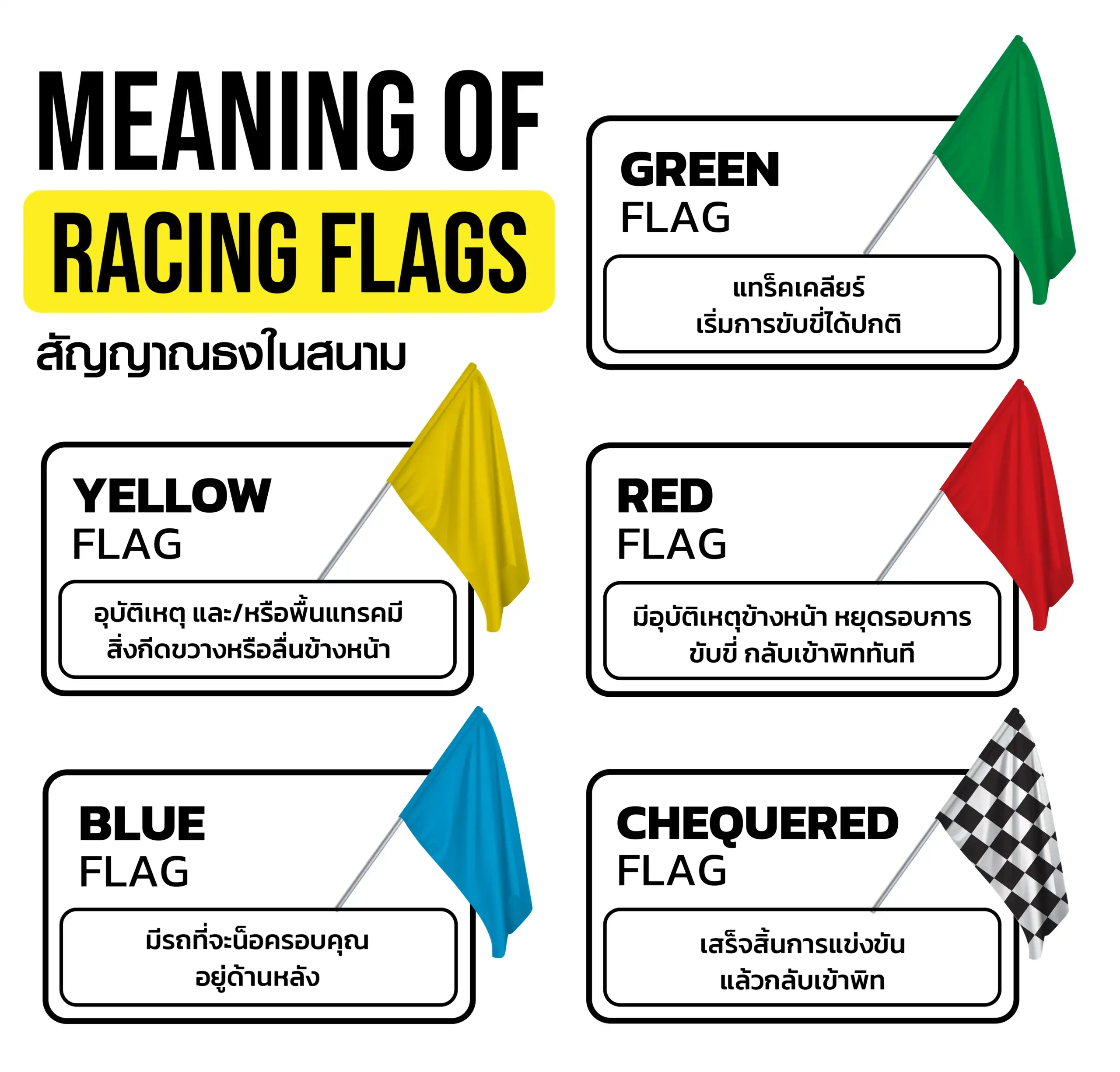
12 The meaning of flag signals.
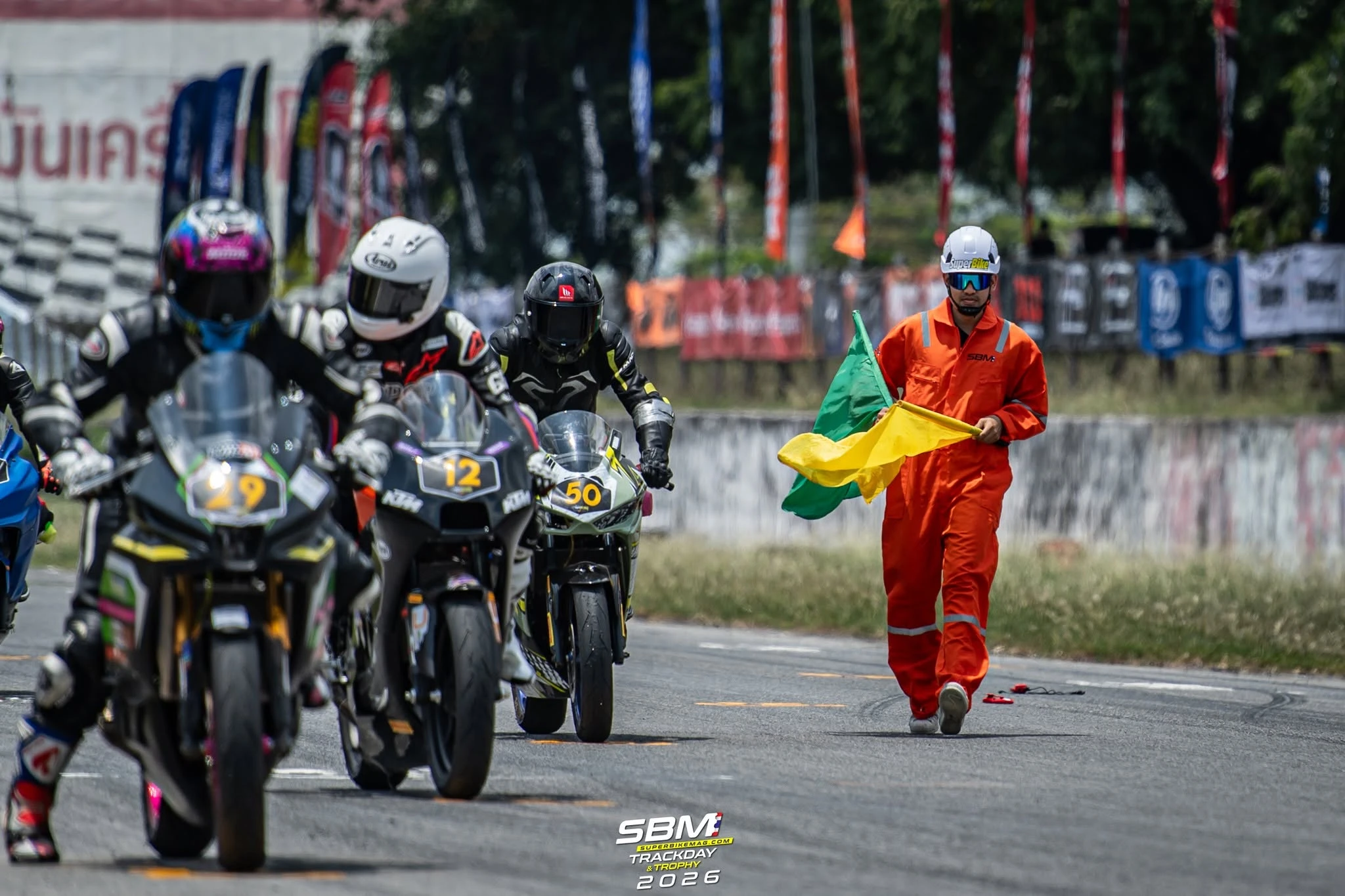
- 🟢 Green Flag
Meaning: It is safe to continue or start the race.- After the danger zone, or the start of the competition.
- 🟡 Yellow Flag
Meaning: There is danger ahead. Reduce your speed and do not overtake.- There have been crashes and breakdowns on the track, or vehicles stopped while waiting for track officials to remove them.
- In case of an accident at point 3 (points 3, 2, and 1 must display a yellow flag).
- There is debris or oil leaking on the track.
- Field staff are currently working on the field.
- 🔴 Red Flag
Meaning: Stop the competition immediately.- There may be a mass accident or serious injuries requiring an ambulance to be deployed to the field.
- The field is wet or suddenly flooded, making it unsafe.
- There are vehicle wreckage or oil spills that will take a long time to clear.
- Time's up for each lap on the track.
- note: The race must be stopped immediately, and drivers must return to the pit lane or starting line as instructed by the track officials. Accelerating or overtaking is prohibited while returning to the safe area. Wait for further instructions on whether to restart, continue with the results from the previous lap, or end the race.
- 🔵 Blue Flag
Meaning: The driver who is lapped must yield to the leading driver. - 🏁 Checkered Flag
Meaning: The race is over. Drivers must cross the finish line, slow down, and return to the pit.